
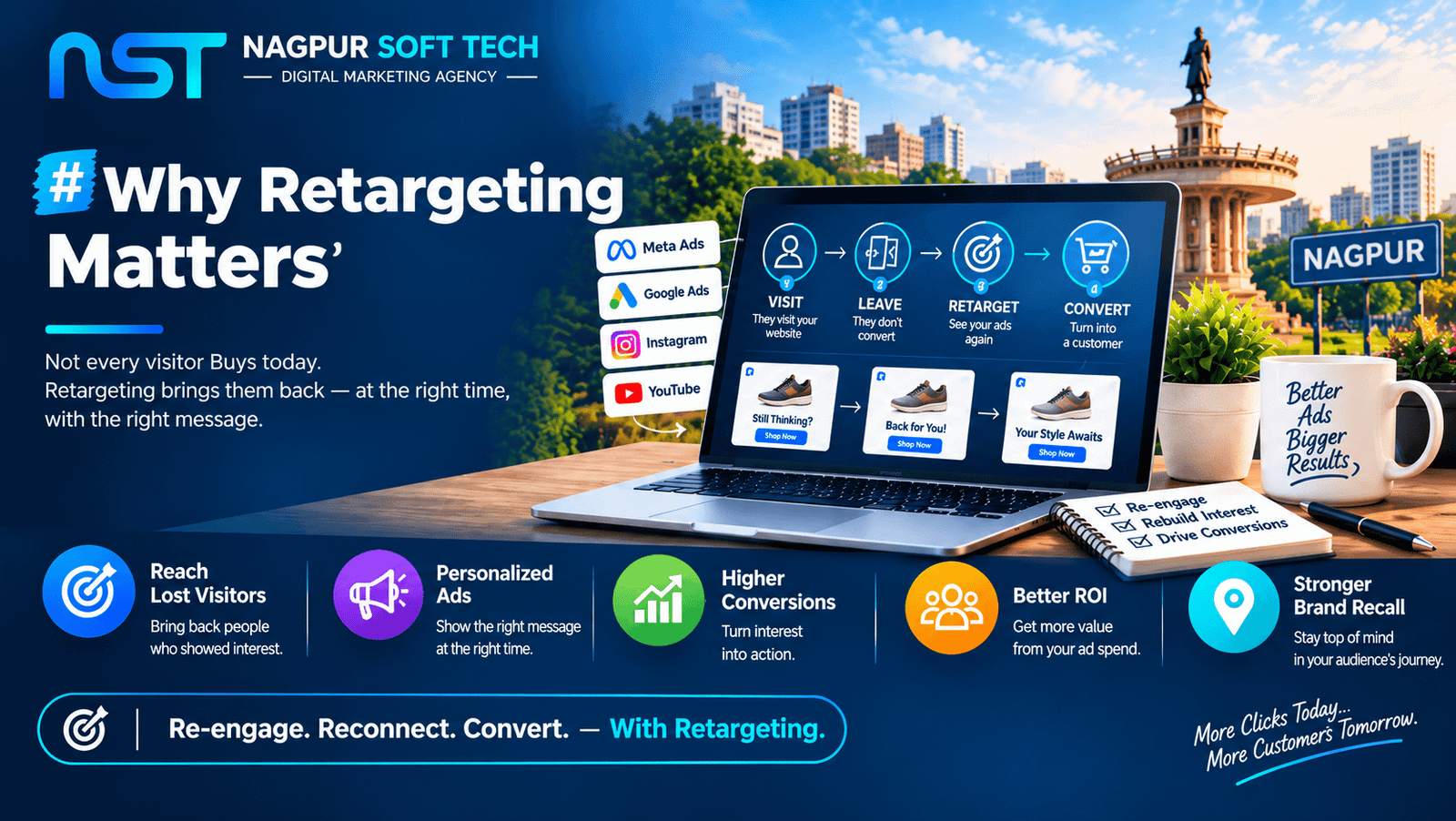
What Happens to the 98% Who Don't Convert?
Most website visitors leave without buying, booking, or filling a form. Across industries, roughly 2-4% of first-time visitors convert on that visit. The other 96-98% click away, and in a standard campaign, they’re gone for good. Retargeting is the one tool built specifically to win that traffic back, instead of treating every lost visitor as a dead end.
What Retargeting Actually Is
Retargeting shows ads specifically to people who already visited your website, viewed a product, or interacted with your social media, as they browse elsewhere online. A small tracking pixel on your site adds a visitor to an audience list the moment they land on a page. From there, platforms like Google Ads and Meta let you show that exact person a follow-up ad on YouTube, Instagram, Facebook, or other sites across the web.
Why a Bounce Isn't a Lost Customer
Someone leaving your site isn’t necessarily disinterested. They might have been interrupted, wanted to compare two or three options first, or simply weren’t ready to decide that day. Most purchase decisions, especially for services like real estate, healthcare, or anything above a small price point, take multiple visits before someone commits. Retargeting keeps your business visible during that gap, instead of handing the decision over to whichever competitor they see next.
The Core Benefit: Familiarity Builds Trust
People are far more likely to buy from a brand they’ve seen more than once. A single ad impression rarely closes a sale, but repeated, relevant exposure builds the familiarity that turns browsing into buying. Retargeting is simply the most direct way to control that repeat exposure, instead of hoping an interested visitor happens to stumble back to your site on their own.
Retargeting Costs Less Than Chasing New Traffic
Retargeting audiences convert at meaningfully higher rates than cold traffic, because you’re showing ads to people who have already shown real interest, not strangers who’ve never heard of you. That higher conversion rate usually means a lower cost per lead compared to campaigns targeting entirely new audiences, making retargeting one of the more efficient budget lines in a paid ads account.
Common Ways to Use Retargeting
- Site visitors who didn’t convert — show them a reminder ad or an offer nudging them back
- Cart abandoners (for e-commerce) — remind them of the exact product they left behind
- Past customers — bring previous buyers back for repeat purchases or seasonal offers
- Video or social engagers — retarget people who watched a video or engaged with a post, even if they never visited the website
- Specific page visitors — show different ads to someone who viewed your pricing page versus someone who only read a blog post, since their intent is different
Getting Retargeting Right
Retargeting works best with a few basics in place: a clear frequency cap so the same person isn’t shown your ad dozens of times a day, ad creative that’s actually different from what they already saw (not a repeat of the exact same ad), and a landing page that matches what the ad promised. Poorly managed retargeting, shown too often with no variation, tends to annoy visitors rather than bring them back. Our PPC services in Nagpur build retargeting as a structured part of the campaign, not an afterthought bolted on at the end.
Where Retargeting Fits in a Bigger Strategy
Retargeting isn’t a replacement for getting the fundamentals right elsewhere. If your landing page is slow or confusing, or your initial ad targeting is pulling in the wrong audience, retargeting will just bring the same unqualified visitors back a second time. It works best layered on top of solid SEO, a clear website, and well-targeted initial campaigns, which is why we build it as one piece of a full digital marketing strategy rather than a standalone fix.
Final Thoughts
A visitor leaving your site without converting isn’t the end of that opportunity; it’s the start of a second chance to earn the sale. Retargeting is the most direct way to take that chance instead of losing it to whichever business shows up next in their feed. Done with the right frequency, creative, and targeting, it turns the 96% of traffic that normally gets wasted into one of the highest-return parts of a marketing budget.
FAQ
How long should a retargeting campaign run for one visitor?
Most retargeting windows run anywhere from 7 to 90 days depending on the typical decision timeline for your product or service. A low-cost impulse purchase might use a shorter window, while a service with a longer consideration period, like real estate, benefits from a longer one.
Will retargeting annoy people and hurt my brand?
Only if it’s set up poorly. Setting a frequency cap (how many times one person sees the ad per day or week) and rotating creative keeps retargeting helpful rather than repetitive. Done right, people often don’t consciously notice they’re being retargeted at all.
Does retargeting work for service businesses, not just e-commerce?
Yes. While cart abandonment retargeting is common for e-commerce, service businesses, clinics, real estate, and local businesses all benefit from retargeting site visitors and past inquiries who didn’t convert the first time.
What's the difference between retargeting and remarketing?
The terms are often used interchangeably. Technically, retargeting usually refers to ads shown to website visitors through display or social ads, while remarketing can also include email campaigns sent to past visitors or customers. Most people use both terms to mean the same thing today.
How much budget should I put toward retargeting versus new customer ads?
There’s no fixed rule, but many businesses see strong results allocating 15-25% of total ad spend toward retargeting, since it typically delivers a lower cost per conversion than prospecting for entirely new audiences. The right split depends on your traffic volume and sales cycle.