
Why Is This Such a Common Question?
Almost every business owner who decides to advertise online lands on the same fork: Google Ads or Facebook Ads. Both can generate leads, both let you control your budget, and both have agencies promising great results. But they work in fundamentally different ways, and picking the wrong one first is one of the most common reasons a small ad budget gets burned without results.
The Core Difference: Intent vs Interruption
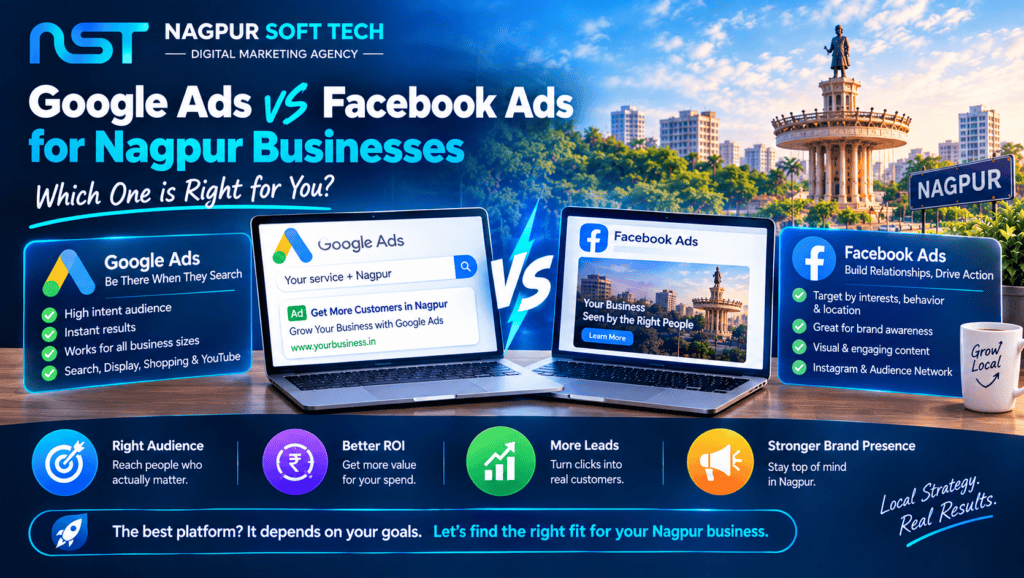
Google Ads reaches people who are actively searching for something. Someone types “CA in Nagpur” or “AC repair near me,” your ad appears, and they click because they need that exact thing right now. Facebook Ads, which also run across Instagram under Meta’s ad platform, work the opposite way. People are scrolling through feeds with no particular purchase in mind, and your ad interrupts that scroll. Google captures existing demand; Meta creates new interest. Most of the differences between the two come back to this one point.
When Google Ads Makes More Sense
Google Ads tends to work best when customers already know they need what you sell and search for it by name or need. That includes urgent or problem-driven services (plumbers, clinics, repair services, lawyers), high-intent local searches, and businesses where someone typically researches and then contacts a provider within days. Because the person is already looking, the leads tend to be warmer, though the cost per click is often higher in competitive categories. If your Google Ads are already running but the phone isn’t ringing, this breakdown of why Google Ads get clicks but no calls covers where campaigns usually break.
When Facebook and Instagram Ads Make More Sense
Meta Ads work well when your product is visual, impulse-driven, or something people didn’t know they wanted until they saw it: fashion, food, salons, fitness, real estate projects, events, and D2C products. Targeting by location, age, interests, and behavior lets you put a business in front of a defined audience cheaply, and creative formats like video and carousels give you room to tell a story a search ad can’t. The trade-off is that leads from social feeds are often colder, so the follow-up process (a fast callback, a WhatsApp reply, a clear offer) matters more.
Cost, Control, and Learning Curve
Neither platform has a fixed price; both run on auctions, so cost depends on your industry, competition, targeting, and ad quality. In general, Google search clicks cost more per click but come from people with stronger purchase intent, while Meta impressions and clicks are often cheaper but convert at a lower rate per click. Comparing the two on cost per click alone is misleading. The number that matters is cost per qualified lead, and that depends on how well the landing page and follow-up are set up on either platform.
How Targeting Differs
Google targets by keywords and search behavior: you choose the searches you want to appear for, plus location and device. Meta targets by who the person is: demographics, interests, behaviors, and lookalike audiences built from your existing customers. This means Google rewards careful keyword selection and negative keywords, while Meta rewards strong creative and audience testing. Both reward clean conversion tracking, since neither can optimize without knowing which leads actually turned into customers.
Can You Use Both Together?
Yes, and for many businesses that’s where the best results come from. Meta ads build awareness and put your brand in front of people who haven’t searched yet; Google captures them when they do start searching, and retargeting on both platforms brings back visitors who didn’t convert the first time. If budget is limited, though, don’t split it thin across both. Start with the platform that matches how your customers actually buy, prove it works, then expand.
How to Decide Where to Start
- If customers search for your service when they need it, start with Google Ads
- If your product is visual or discovery-driven, start with Meta Ads
- If you have a small budget, pick one platform and get it profitable first
- If you have a longer sales cycle, plan to use both, with retargeting tying them together
- Whichever you choose, set up conversion tracking for calls, forms, and WhatsApp before spending anything
Choosing the platform is only half the job; setup, tracking, and ongoing optimization decide whether the budget pays off. That’s what our PPC services in Nagpur and social media marketing services in Nagpur are built around, and you can see examples of the kind of campaigns we run on our case studies page.
Final Thoughts
Google Ads and Facebook Ads aren’t competitors so much as tools for different jobs. One catches people already looking; the other introduces your business to people who haven’t started looking yet. The right first choice depends on how your customers actually find and decide on businesses like yours, and the best long-term setup for most businesses uses both, each doing the job it’s best at. For a broader view of how these channels fit into one plan, see our digital marketing services in Nagpur.
FAQ
Which is better for a small business with a limited budget, Google Ads or Facebook Ads?
It depends on how customers buy. If people actively search for your service, Google Ads usually produces leads faster. If your offering is visual or impulse-driven, Meta Ads can be more cost-effective. With a small budget, pick one and make it profitable before adding the other.
Are Facebook Ads and Instagram Ads the same thing?
They’re managed through the same platform, Meta Ads Manager, and you can run ads across both from a single campaign. They’re different placements with different audience behavior, so creative often needs adjusting for each.
Why are my Facebook Ads getting leads that never pick up the phone?
Leads from social feeds are usually lower-intent than search leads, so speed and follow-up matter more. Calling or messaging quickly, qualifying the lead, and making the lead form specific enough to filter out casual clicks usually improves results.
Do I need a website to run Google Ads or Facebook Ads?
Google Ads generally needs a landing page to send traffic to. Meta Ads can run with lead forms or messaging inside the platform, but a fast, clear website still improves conversion on both and helps with retargeting.